Iterated Distinction,
Temporal Structure, and
Information
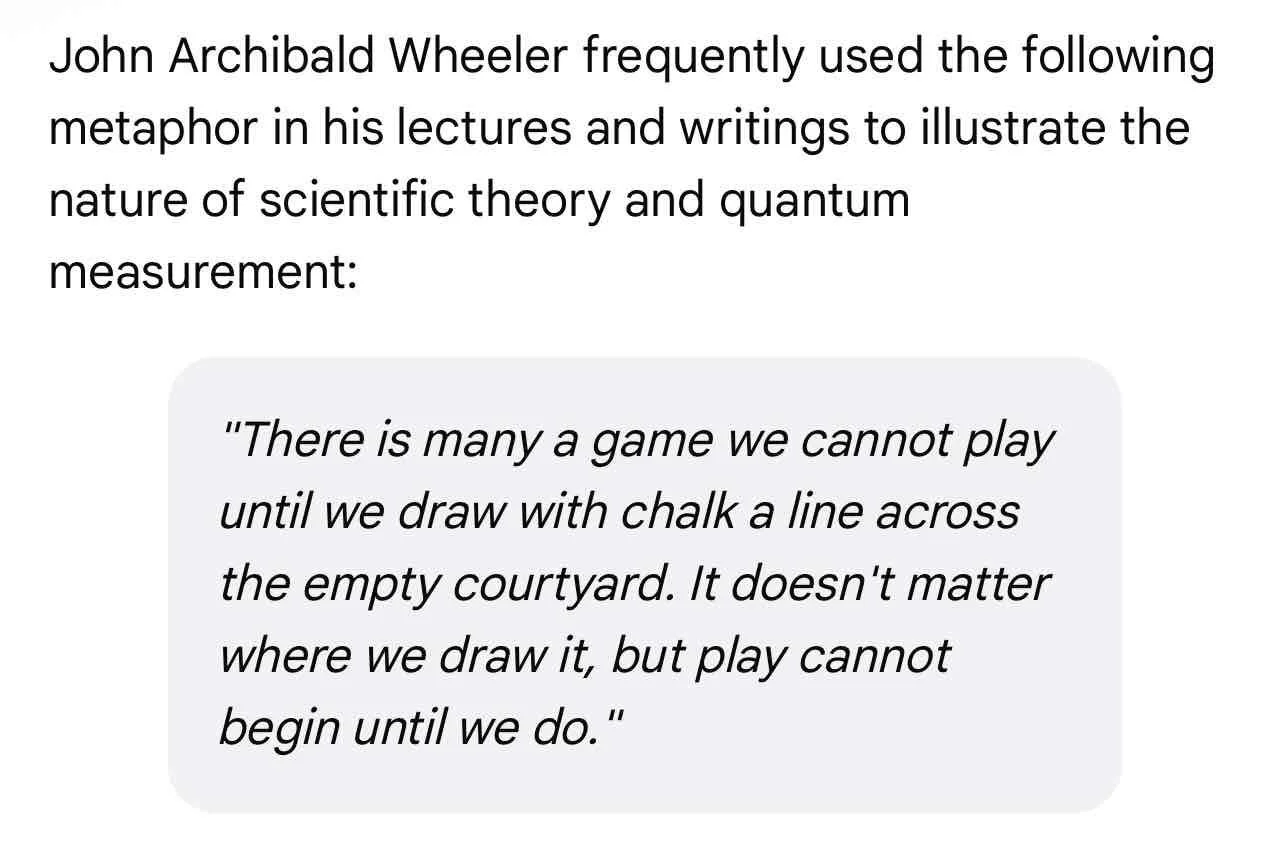
The question "is this the same as that, or different?" may be more primitive than questions of truth, objecthood, or representation. Before an observer can identify an object or construct a measurement, there must first exist some operation capable of distinguishing one state from another.
In computation and information theory, this operation already has a canonical form: XOR.
XOR answers a minimal question. Given two inputs, are they the same, or are they different?
This distinction operation appears throughout computation, error correction, and quantum information theory. Yet it is rarely treated as philosophically foundational. Instead, it is usually introduced as a technical operation embedded within larger formal systems. What interests me is the possibility that distinction itself —- implemented computationally through comparison —- may deserve a more central role in how we think about information, observation, and structure.
My own work approaches these questions materially through weaving, sculpture, and rule-based systems. In these systems, local comparisons propagate through time, gradually producing larger coherent forms. The process unfolds computationally, but through embodied material constraints. Structure emerges not from centralized design, but through repeated acts of local distinction.
A useful starting point is XOR viewed not merely as a logical operator, but as a detector of difference across time.
For binary values (a) and (b),
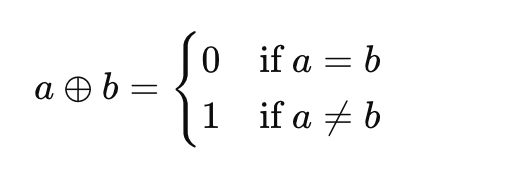
XOR returns 1 precisely when two states differ. In this sense, it functions as a primitive comparison operation. Importantly, comparison is relational. It does not describe isolated entities; it describes distinctions between states.
This becomes more interesting when distinction is iterated through time.
Suppose we represent a comparison process as a two-phase structure:
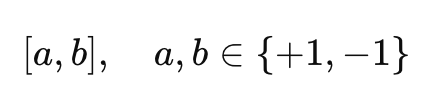
The pair records the outcome of a distinction at two successive moments. One operation detects polarity or difference; another exchanges temporal order. If these operations are allowed to anti-commute, an algebraic structure emerges that resembles the Pauli algebra familiar from quantum mechanics and quantum information theory.
Defining:
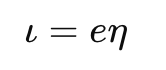
with the anti-commutation relation
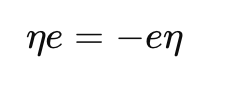
one obtains:
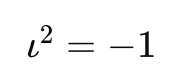
The point is not that this "derives quantum mechanics." It does not. The construction is modest. But it suggests something conceptually interesting: structures resembling aspects of qubit algebra emerge naturally from iterated distinction operations coupled to temporal ordering.
This becomes particularly suggestive in the context of quantum information theory, where XOR-like operations already play a central role. The controlled-NOT gate implements a quantum form of XOR, and parity checks in quantum error correction ask fundamentally distinction-based questions: are these states the same, or are they different?
In this sense, information may be less about static representation than about the maintenance and propagation of stable distinctions.
This perspective also intersects with recent work in observer theory and computational physics. In Stephen Wolfram's observer-theoretic framework, observers are computationally bounded systems extracting coherent structure from an underlying computational substrate. What counts as an object, a causal process, or a persistent identity depends partly on the distinctions an observer is capable of stabilizing.
From this perspective, ontology becomes closely tied to processes of distinction-making. A "thing" is not merely present in the world waiting to be discovered. It emerges as a stable region of distinguishability relative to an observer, a measurement process, or a computational boundary.
This shift has consequences for how we think about information itself.
Constructor theory, developed by David Deutsch and Chiara Marletto, reframes information in terms of physically possible and impossible transformations. Information-bearing states are not merely symbolic labels; they are physically realizable distinctions that can, in principle, be preserved, copied, or transformed.
What matters are not only actual states, but counterfactual alternatives: what could have occurred, what could have been distinguished, and which transformations remain physically possible.
Seen this way, information, observation, and ontology begin to converge around a common structure: the stabilization of distinctions within a computationally bounded world.
My interest in these questions is not purely formal. Material systems often reveal computational structure with unusual clarity. Weaving, in particular, exposes how local comparisons propagate into global organization. Small asymmetries amplify. Errors become historically embedded. Symmetries emerge not only as aesthetic features, but as functional affordances for orientation and error detection.
A woven structure can therefore function simultaneously as:
material object,
computational trace,
and record of sequential decisions through time.
The resulting forms are neither purely symbolic nor purely physical. They occupy an intermediate space where computation becomes tactile, historical, and observer-dependent.
I do not regard these ideas as conclusions. They are exploratory notes situated somewhere between computational philosophy, information theory, and material practice. What interests me most is the possibility that distinction itself —- the minimal act of separating same from different —- may be more foundational than many of the conceptual categories built upon it.